Transporting Products in a Refrigerated Vehicle: How to Maintain the Cold Chain

Transporting products that require controlled temperature conditions is an important part of the daily operations of many businesses.
Food, frozen goods, pharmaceuticals and other temperature-sensitive products may require specific conditions during storage and transportation.
In this process, the refrigerated vehicle is one of the most important links in the cold chain.
Effective transportation, however, does not depend on the refrigeration unit alone. The construction and thermal insulation of the compartment, correct loading, door management, temperature monitoring and equipment maintenance all need to work together as one integrated system.
What is the cold chain?
The cold chain refers to the processes used to maintain products under the appropriate temperature conditions from production or storage through to their final destination.
The process may include:
Production → Storage → Loading → Transportation → Distribution → Delivery
Maintaining an uninterrupted cold chain is particularly important, as an unwanted temperature change at any stage can affect temperature-sensitive products.
What products can be transported in refrigerated vehicles?
Refrigerated vehicles are used across a wide range of industries.
Depending on the requirements of each application, they may be used to transport:
- fresh and frozen food,
- meat and meat products,
- fish and seafood,
- dairy products,
- fruit and vegetables,
- bakery and confectionery products,
- ingredients and supplies for food-service businesses,
- pharmaceutical products,
- flowers and plants,
- other products requiring specific temperature conditions during transportation.
Each category may have different requirements. The refrigerated compartment should therefore be designed according to the vehicle’s actual intended use.
The role of the refrigerated compartment
A refrigerated vehicle is not simply a commercial van or truck fitted with a refrigeration unit.
The insulated compartment and refrigeration unit form an integrated system.
Thermal insulation helps reduce heat transfer from the external environment, while the appropriate refrigeration system helps maintain the required conditions inside the compartment.
When designing a refrigerated vehicle, several factors should therefore be considered:
- type of cargo,
- required temperature,
- dimensions and volume of the compartment,
- external conditions,
- route duration,
- frequency of deliveries,
- number of door openings.
- Determine the actual temperature requirements
The first step is to establish exactly what the vehicle will transport.
Not all products have the same requirements. Frozen goods may require different conditions from chilled products, pharmaceuticals or other temperature-sensitive cargo.
The required temperature is a key factor in both the design of the compartment and the selection of the appropriate refrigeration unit.
- Prepare the refrigerated compartment correctly
Before loading, the compartment should be in a suitable condition for the products being transported.
The cargo area should be clean and the equipment should be operating correctly.
Where required, the compartment should also be brought to the appropriate conditions before loading begins.
A refrigerated vehicle is primarily designed to maintain the required conditions during transport and should not be regarded as a substitute for correctly preparing the products before loading.
- Load the vehicle correctly
The way cargo is positioned affects both practicality and the performance of the refrigerated compartment.
Loading should allow appropriate air circulation while also supporting safe and efficient loading and unloading.
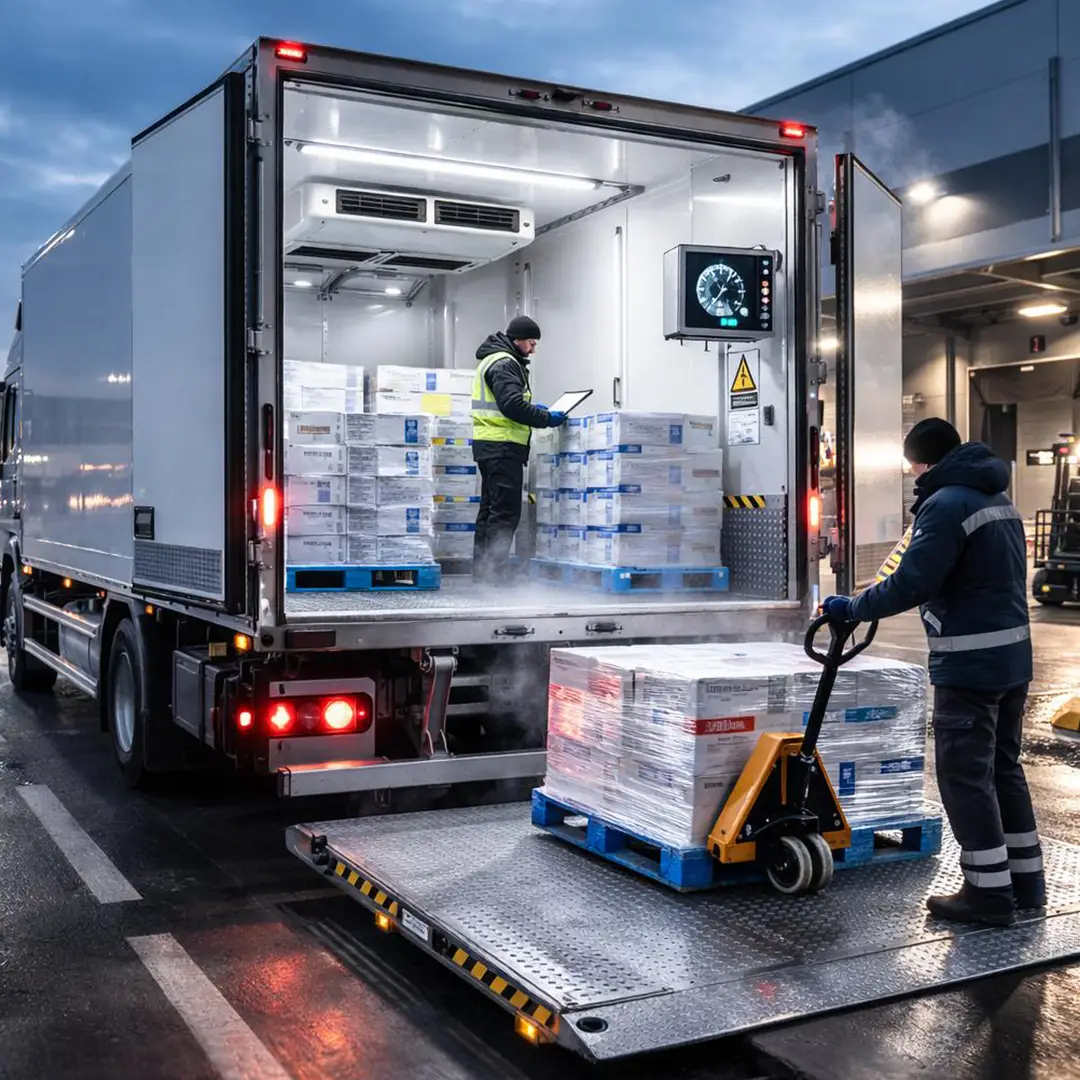
For vehicles making multiple deliveries each day, organising products according to the order of delivery stops can significantly reduce the time required at each destination.
- Minimise door opening times
Every time a door is opened, air is exchanged between the refrigerated compartment and the external environment.
For a vehicle making multiple deliveries each day, this may happen dozens of times.
A suitable compartment layout, properly positioned doors and organised loading can reduce the amount of time doors remain open.
Depending on the application, partitions or separate compartments may also be incorporated to meet specific transportation requirements.
- Thermal insulation is a fundamental part of the build
The thermal insulation of a refrigerated compartment directly affects its thermal performance.
This is particularly important in countries with high summer temperatures, where a vehicle may spend many hours on the road or exposed to direct sunlight.
Properly designed and installed insulation limits heat transfer from the external environment and helps the refrigeration system operate more effectively.
The refrigeration unit should therefore be selected in conjunction with the characteristics of the insulated compartment.
- Monitor conditions during transportation
Depending on the product and application requirements, temperature measurement and/or recording may be necessary during the journey.
Appropriate monitoring equipment gives businesses greater visibility into the conditions inside the refrigerated compartment.
This is particularly important for cargo subject to strict transport specifications, where documented temperature conditions may form part of the management and quality-control process.
- Cleanliness and suitable internal surfaces
Easy and effective cleaning is an important feature of any professional refrigerated compartment.
Requirements may vary depending on the type of cargo, but the quality of the internal surfaces, joints and flooring has a significant impact on daily operation.
The compartment should therefore be designed with not only temperature requirements in mind, but also loading, cleaning and maintenance procedures.
- Don’t neglect preventive maintenance
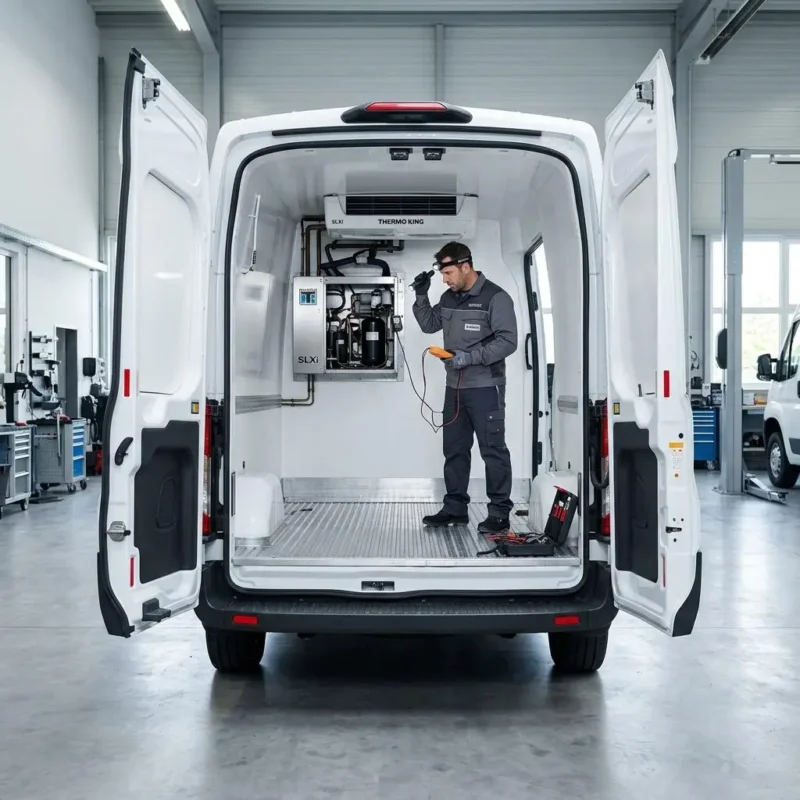
The reliability of a refrigerated vehicle also depends on how well it is maintained.
Doors, seals, internal surfaces, flooring and refrigeration equipment should be inspected regularly.
Minor damage identified and repaired early can prevent more serious problems in the future.
The refrigeration unit should also be maintained according to the prescribed service requirements by appropriately qualified technical personnel.
Every type of cargo requires a different solution
There is no single refrigerated compartment suitable for every professional application.
A small van used for daily deliveries has different requirements from a larger truck. Similarly, frozen food transportation may require different conditions from pharmaceutical products or other temperature-sensitive goods.
Before construction begins, it is therefore important to consider:
Product → Temperature → Vehicle → Load → Routes → Delivery Method
Based on these factors, a refrigerated compartment can be designed around the actual requirements of the business.
A reliable cold chain starts with the right design
Safe and efficient transportation of temperature-controlled products requires an integrated approach.
Proper thermal insulation, an appropriate refrigeration unit, organised loading, condition monitoring and regular maintenance are all parts of the same system.
A refrigerated compartment designed around the operator’s actual requirements can contribute to reliable vehicle operation and proper product management throughout transportation.
Need a refrigerated compartment for your commercial vehicle?
Whether you operate in the food, catering, pharmaceutical or another sector requiring temperature-controlled transportation, the right solution begins with understanding your specific requirements.
Contact us to discuss your business requirements and design a refrigerated body tailored to your vehicle, cargo and daily operations.