



Van Conversion into a Refrigerated Vehicle: What You Need to Know Before the Build

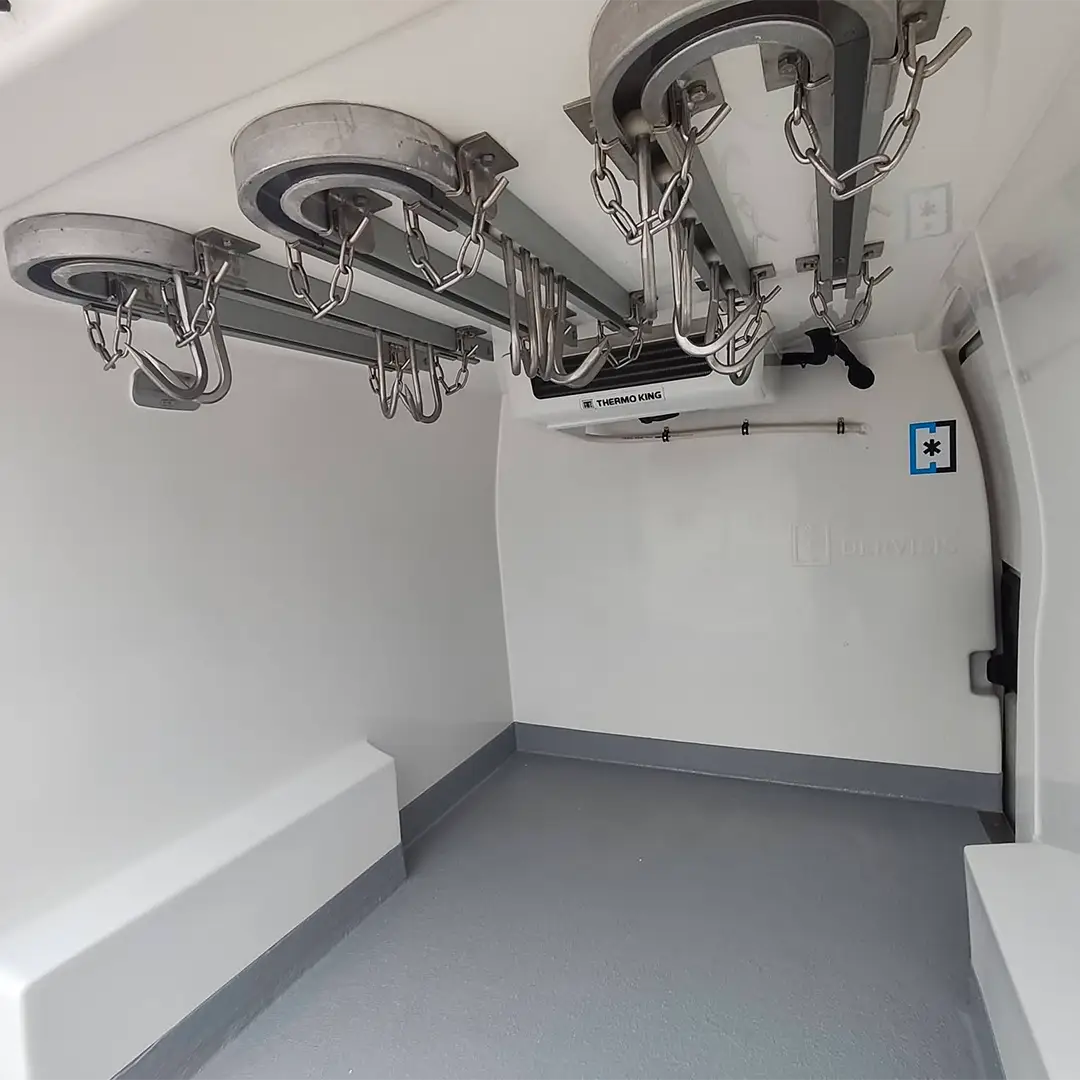
Vans are one of the most practical choices for businesses and professionals that need to transport temperature-sensitive products on a daily basis.
Thanks to their relatively compact exterior dimensions, manoeuvrability in urban environments and available cargo space, vans can be converted into highly functional refrigerated vehicles.
However, a proper conversion requires careful planning. Simply installing insulation and a refrigeration unit is not enough.
The refrigerated compartment must be designed around the vehicle, the type of cargo, the required temperatures and the way the vehicle will actually be used on a daily basis.
What professional applications is a refrigerated van suitable for?
A van equipped with a refrigerated compartment can serve a wide range of professional applications.
Depending on its configuration and equipment, it can be used to transport:
- fresh or frozen food,
- meat and meat products,
- fish and seafood,
- dairy products,
- fruit and vegetables,
- bakery and confectionery products,
- ingredients and supplies for restaurants and catering businesses,
- pharmaceutical products,
- flowers and plants,
- other products requiring specific temperature conditions.
Requirements naturally vary from one application to another. This is why the design process should always begin with a clear understanding of exactly what the vehicle will be transporting.
- Choose the right van
Selecting the right vehicle is the first step towards creating a properly configured refrigerated van.
The original dimensions of the cargo area are not the only factor that needs to be considered.
Other important factors include:
- internal dimensions,
- permitted and usable payload,
- access to the cargo area,
- rear and side doors,
- the volume of products to be transported,
- the type of routes the vehicle will operate on.
The construction of the refrigerated compartment, insulation and installation of the necessary equipment will affect both the available cargo space and the vehicle’s overall weight.
For this reason, it is best to consider the vehicle and its conversion as a single, integrated project.
- Determine the temperature you actually need
One of the most important factors to establish before construction begins is the required transport temperature.
Not all products have the same temperature requirements.
A vehicle transporting chilled products may have very different requirements from a van carrying frozen goods or other products subject to stricter temperature specifications.
The required temperature affects both the insulation design and the selection of the appropriate refrigeration equipment.
The manufacturer therefore needs to know from the outset what will be transported and under what conditions.
- Calculate the available space after insulation
A common mistake when choosing a van is to assume that the entire original cargo area will remain available after conversion.
In practice, the installation of thermal insulation, flooring and interior linings reduces the final usable dimensions.
This is particularly important when the business uses equipment of specific dimensions, such as boxes, crates, trolleys or other load-handling units.
Actual loading requirements should therefore be established during the planning stage.
This allows the refrigerated compartment to be designed around the way the business actually operates.
- Pay particular attention to thermal insulation
Thermal insulation is a fundamental part of a properly designed refrigerated vehicle.
Its purpose is to limit heat transfer between the external environment and the interior of the refrigerated compartment.
The quality of the insulation becomes even more important during the warmer months, when a commercial van may spend many hours on the road and be exposed to high ambient temperatures.
Proper insulation works together with the refrigeration system to help maintain the required conditions inside the compartment.
For this reason, insulation and refrigeration equipment should not be selected independently of one another.
- Design the doors around daily use
In many professional applications, a refrigerated van makes several deliveries during the course of a single day.
This means that its doors may be opened and closed frequently.
Every time a door is opened, air is exchanged between the refrigerated compartment and the external environment.
The number, position and dimensions of the doors should therefore be determined according to the vehicle’s daily operating requirements.
A properly positioned side door, for example, can make deliveries significantly easier in certain applications by providing faster access to a specific section of the load.
Ergonomics matter. A refrigerated vehicle should help professionals work quickly and efficiently.
- Pay attention to floor construction
The floor of a commercial refrigerated van is subjected to demanding conditions every day.
Cargo weight, repeated loading and unloading, moisture and frequent cleaning all place significant stress on the floor.
Important considerations include:
- durability,
- watertightness,
- slip resistance where required,
- ease of cleaning,
- the way the vehicle will be loaded.
If specific loading equipment will be used, this should also be taken into account before construction begins.
- Choose the refrigeration unit according to actual use
A refrigeration unit should not be selected solely on the basis of a single technical specification or its nominal capacity.
The right system depends on several factors, including:
- the final volume of the compartment,
- thermal insulation,
- required temperatures,
- external conditions,
- type of cargo,
- route duration,
- frequency of door openings.
The objective is for the refrigerated compartment and refrigeration unit to operate as one properly engineered system.
- Do you need one or more temperature zones?
Some professional applications may require different types of products to be transported in the same vehicle.
Depending on the requirements, separate compartments or temperature zones may be considered within the refrigerated body.
This needs to be incorporated at the design stage, as it affects the layout, available space and refrigeration system requirements.
It is not necessary for every business, but where required, it can make the vehicle significantly more functional.
- Don’t overlook everyday practicality
A refrigerated van is, above all, a professional working tool.
Small design details can make a major difference when the vehicle is used every day.
Before finalising the layout, it is worth considering questions such as:
Where will the vehicle be loaded? How many deliveries will be made each day? How will the cargo be organised? Is side access required? Is there specific equipment that needs to fit inside the compartment?
The answers help create a refrigerated vehicle tailored to the professional’s actual working requirements.
- Check the requirements that apply to your business
Depending on the type of cargo, vehicle use and routes, specific requirements may apply to the transport of temperature-controlled products.
Before construction or conversion begins, the requirements relevant to the particular business activity and vehicle should therefore be reviewed.
Proper planning from the outset helps ensure that the final build meets both the operational needs of the business and the requirements of its intended use.
Why is proper planning so important when converting a van into a refrigerated vehicle?
Converting a van into a refrigerated vehicle involves much more than simply adding insulation and a refrigeration unit.
It is an integrated build in which every element needs to work together:
Vehicle → Thermal Insulation → Refrigerated Compartment → Refrigeration Unit → Layout → Daily Operation
A properly engineered conversion can make better use of the available space, improve functionality and provide a professional vehicle tailored to the actual needs of the business.
Need a refrigerated compartment for your van?
Every business has different requirements, which is why the right solution should be designed according to the vehicle, the cargo and the way it will be used.
Whether you need a refrigerated van for food, pharmaceuticals, flowers or another temperature-controlled professional application, the process should always begin with proper planning.
Contact us to discuss your requirements and design a refrigerated compartment tailored to your van and the needs of your business.